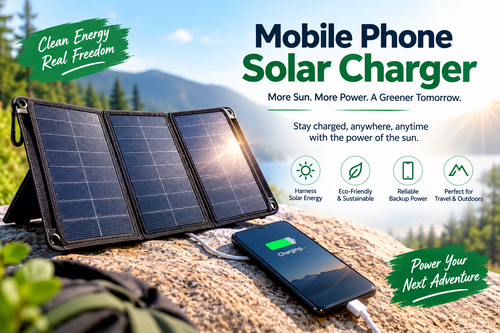
Mobile Phone Solar Charger: How It Works, Benefits & Why You Need One in 2026
As smartphones have become essential for communication, navigation, entertainment, and...

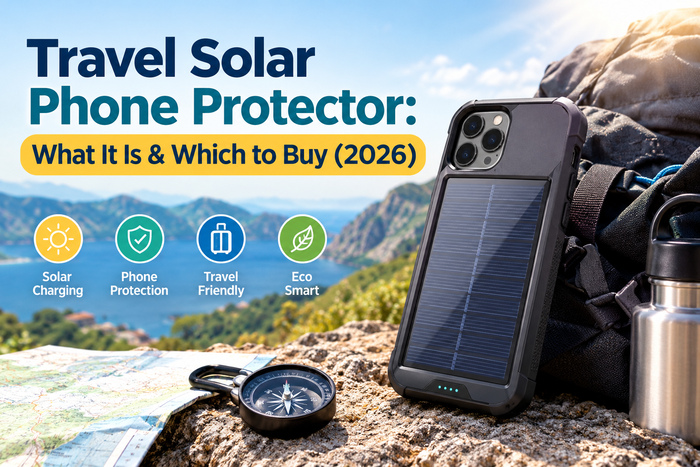
Your phone is your map, camera, boarding pass and translator all in one. Then, somewhere between a mountain viewpoint and a long train ride, the battery drops to 4%. That is the moment a travel solar phone protector starts to make sense.
It sounds like a gadget with big promises, so let’s be straight about it. This guide explains what a travel solar phone protector really is, how it works, where it falls short, and how to choose a good one. At iPowerUp Corporation, we believe buyers deserve honest numbers instead of hype, so that is the approach here.
What Is a Travel Solar Phone Protector?
A travel solar phone protector is a protective solar phone case or sleeve with a small solar panel built into it. It does two jobs. It shields your phone from drops, dust and splashes, and it gives the phone a slow top-up from sunlight.
Some designs include an internal rechargeable battery that stores the sun’s energy. Others send power straight to your phone. You may also see these products called a solar charging case, solar power bank case or solar phone cover. The names change, but the idea stays the same: protection plus a backup source of portable power.
How Does a Solar Phone Case Work?
The panel uses the photovoltaic effect, which turns sunlight into a small electric current. That current goes either to your phone or to the case’s battery.
How the power is managed matters a lot. Patent filings for early designs point out that connecting the solar cell directly to the phone’s charging circuit can cause overcharge or backflow that damages the phone battery. This is why a built-in charge controller or protection circuit is worth looking for in any travel solar phone protector.
The same filing also notes that such cases work only when there is adequate sunlight. In other words, the panel is a helper, not a miracle.
Is It Worth It? Realistic Expectations
Here is where many guides oversell, so let me be clear. A panel on the back of a phone case is small. Its charging speed is slow compared with a wall charger or a regular power bank.
One hiker who tested a rugged solar case reported that the panel added about 7% charge per hour. For someone who keeps the phone in airplane mode on a trek, that is useful. For someone streaming maps all day, it will not keep up.
So a travel solar phone protector works best as an emergency backup, not as your main charger. Think of it as insurance for long days outdoors, delayed trains and power cuts, not as a replacement for a wall adapter.
What to Check Before You Buy
Battery Capacity (mAh)
If the case has an internal battery, check its mAh rating. A small battery gives you a partial top-up. A larger one gives more charges but adds weight and bulk. Be wary of listings that claim huge capacity in a slim case, because the numbers rarely add up.
Solar Panel Type and Output
Look at the panel size and its wattage. As a general rule, a larger panel gathers more energy, but a phone case can only hold so much surface area. Realistic expectations matter more than the headline watt figure.
Protection Level
A good protective phone case should have raised edges, a shock-absorbing layer and ideally a waterproof or splash-resistant rating such as IP67. If you plan to hike, camp or visit the beach, drop protection and dust resistance are as important as the solar feature.
Heat Management
This is the part most reviews skip. Leaving a phone in direct sun while it charges can push it into overheating. A good travel solar phone protector should have ventilation, a protection circuit, or at least clear advice about not leaving the phone face-down on a hot surface.
Compatibility and Ports
Make sure the case fits your exact phone model and supports your charging port, whether USB-C, Lightning or wireless charging. A case that blocks your camera or buttons gets annoying very quickly.
Solar Phone Protector vs Power Bank
The two products solve the same problem in different ways. A regular power bank charges much faster and holds more energy, but it only works until it runs out, and it is one more item to carry. A solar phone case charges slowly and depends on sunlight, but it can keep producing power when you have no outlet, and it protects your phone at the same time.
If you travel with a lot of devices, a regular power bank is the better workhorse. If you want one less thing to carry and extra protection on adventurous trips, a travel solar phone protector is a smart addition. Many experienced travelers carry both.
Who Should Buy One?
A travel solar phone protector suits:
It is less suitable if you spend most of your day indoors, since the panel needs direct light to be useful.
How to Get the Best Results
Flying With a Solar Power Bank
If your case contains a lithium battery, airlines usually want it in your carry-on, not in checked luggage. Rules also limit battery size, so check your airline’s policy before you fly. A case with a built-in battery is generally treated like a power bank.
Final Thoughts
A travel solar phone protector will not replace your wall charger, and it should not pretend to. What it gives you is peace of mind: a protective case that can squeeze a little power out of the sun when you have nothing else. Choose a design with a proper protection circuit, honest capacity numbers and real drop protection, and treat solar charging as a backup.
At iPowerUp Corporation, we think the best travel tech is the kind you can trust when plans go wrong. Whatever you choose, read the specs carefully, set realistic expectations, and charge your phone fully before every trip.
Frequently Asked Questions (FAQ)
1. Do solar phone cases really work?
Yes, but slowly. They give a modest top-up in good sunlight and are best used as an emergency backup.
2. How long does it take to charge a phone with a solar case?
It depends on panel size, sunlight and your phone’s battery. One hiker measured roughly 7% per hour from a case panel, so a full charge can take many hours.
3. Does a solar phone charger work on cloudy days?
It still produces some power, but much less. Direct sunlight gives the best results.
4. Is it safe to charge a phone in direct sunlight?
It can be risky if the phone gets too hot. Keep it ventilated, avoid hot surfaces, and move it into shade if it feels warm.
5. Can I take a solar power bank on a plane?
Usually yes, in your carry-on bag. Always check your airline’s rules on battery size.
6. Is a solar phone protector better than a power bank?
Not for speed. A regular power bank charges faster, while a solar case adds protection and a sunlight backup in one product.
7. What should I look for in a good solar phone case?
Look for a charge controller, honest mAh numbers, waterproof protection, good heat management, and a perfect fit for your phone model.
As smartphones have become essential for communication, navigation, entertainment, and...
Choosing the right cell phone case feels simple until you...
Your smartphone is an essential part of everyday life, but...
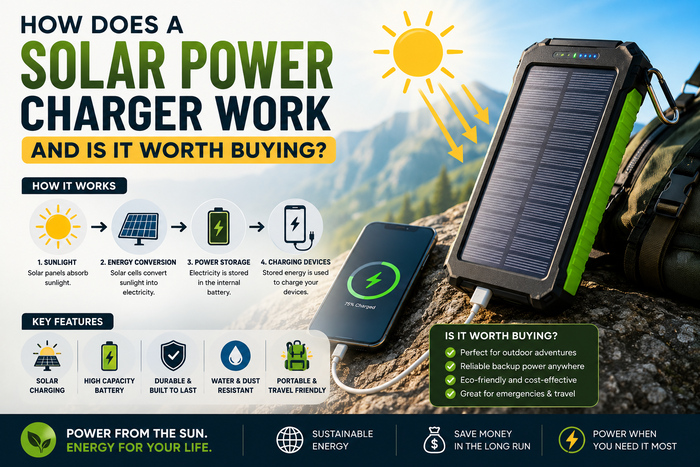
If you've ever searched for a way to charge your...
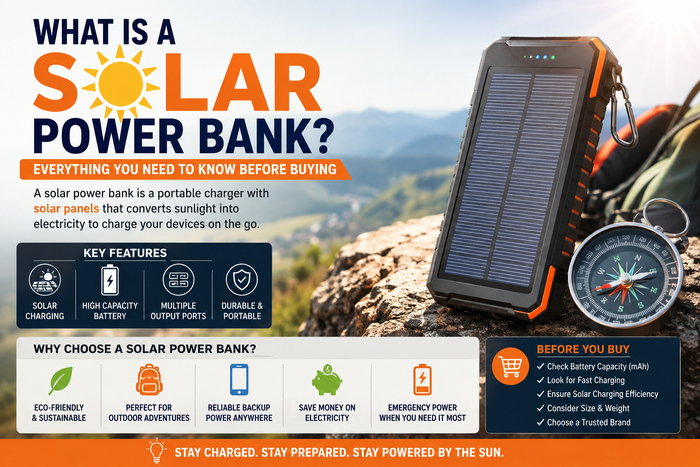
Imagine you are halfway through a hike, your phone is...
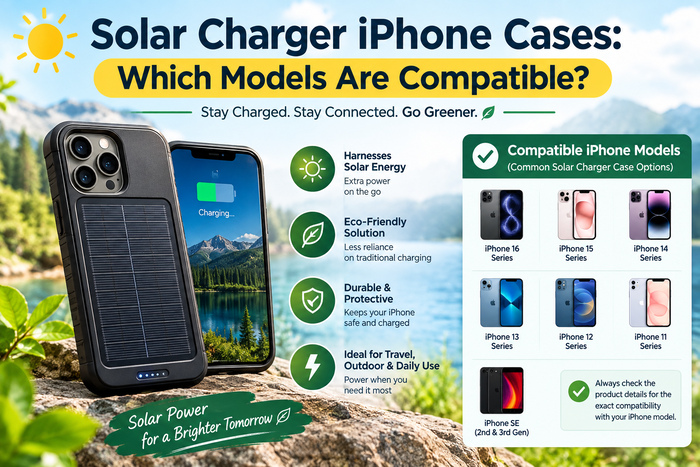
If you've decided to try a solar charger case for...
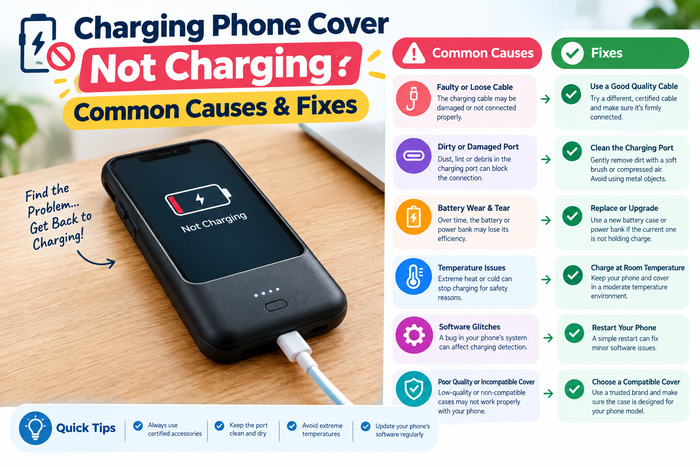
You slip your phone into its charging phone cover, press...
Your phone is your map, camera, boarding pass and translator...
Your phone is at 12%, you are far from an...

Facing bank harassment can cause significant anxiety for borrowers receiving...

Cyber Law & Data Protection lawyers can assist with legal...

A Corporate Case Filling Lawyer will assist your firm with...

Data Analyst Training in Delhi for Automated Business Reporting Careers...