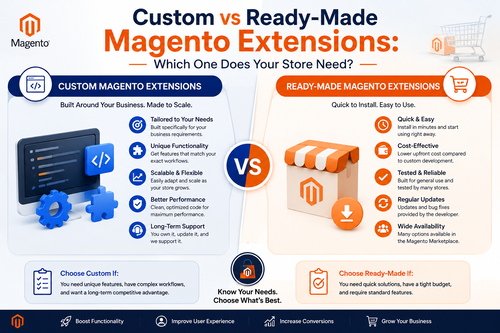
Custom vs Ready-Made Magento Extensions: Which One Does Your Store Need?
At some point, almost every Magento store owner hits the...

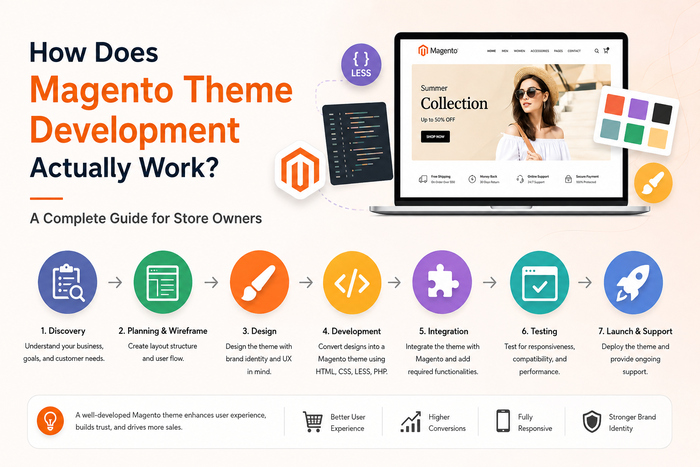
Most people searching for "Magento theme development" aren't just looking for a definition — they want to understand how it works, what's involved, how much control they'll have over the design, and whether it's worth doing custom versus using a ready-made template. This guide answers exactly that, step by step.
Magento Theme Development in Simple Terms
Think of your Magento store as a house. The backend (Magento core) is the foundation and plumbing — it handles inventory, orders, and payments. The theme is everything visible: the layout, colors, fonts, product grid, header, footer, and checkout design.
Magento theme development is the process of building or customizing that visible layer so it matches your brand, works smoothly on every device, and actually helps visitors become paying customers — instead of just "looking nice."
How the Development Process Actually Works
Here's what typically happens when a Magento theme is built professionally:
1. Design & Wireframing
Before any code is written, the layout is planned — homepage structure, category pages, product pages, and checkout flow are mapped out based on how customers actually shop.
2. Theme Structure Setup
Magento 2 uses a parent-child theme structure. A developer creates a custom theme that inherits from Magento's base theme (like Luma) instead of editing core files directly — this keeps future updates safe and easy.
3. Front-End Coding
This is where .phtml templates, layout XML files, and LESS/CSS come together to build the actual design — spacing, typography, buttons, product cards, and navigation menus.
4. Responsive Development
The theme is tested and adjusted across mobile, tablet, and desktop so the experience stays consistent no matter what device a customer uses. This is non-negotiable — most Magento traffic today comes from mobile.
5. Speed & Performance Tuning
Images are optimized, unused scripts are removed, and caching (like Varnish or full-page cache) is configured so pages load fast — this directly affects both user experience and search rankings.
6. Testing & QA
Cross-browser checks, checkout testing, and extension compatibility checks happen before the theme goes live.
What Problems Does Good Theme Development Actually Solve?
People usually land on this topic because of a specific pain point. Here's what proper theme development fixes:
Is Magento Theme Development Difficult to Maintain?
A common concern is long-term maintenance. The good news: if the theme is built correctly (using theme inheritance, not core file edits), updates and Magento version upgrades become far easier. This is one of the biggest advantages of hiring an experienced team over a freelancer who takes shortcuts.
Who Should Handle Your Magento Theme Development?
You generally have three options:
For most growing businesses, an experienced agency offers the right balance of design quality, technical reliability, and post-launch support.
Final Answer: What Should You Do Next?
If your current Magento store feels outdated, loads slowly, or isn't converting the way it should, the theme is very likely part of the problem — not just the products or pricing. Custom Magento theme development addresses design, speed, mobile experience, and SEO all at once, which is why it consistently outperforms generic templates over time.
Want a Magento theme that's actually built around your customers and your growth goals?
Talk to Team Magento for a free store audit — we'll show you exactly where your current theme is holding you back and how a custom-built solution can fix it.
At some point, almost every Magento store owner hits the...
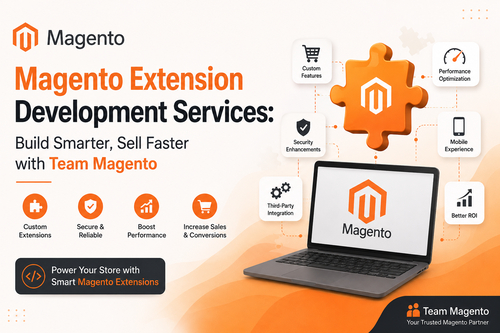
Why Your Magento Store Needs Custom ExtensionsOut-of-the-box Magento is powerful,...

Looking for a reliable Magento Mobile App Development Company to...
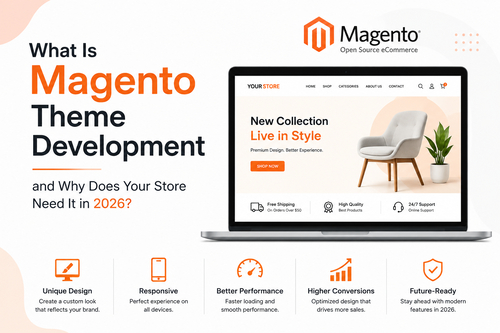
If you’re running an online store and searching for ways...
Most people searching for "Magento theme development" aren't just looking...

If you're running a Magento store today, you already know...
Online shopping doesn't look the same as it did even...

Looking for a reliable Magento Theme Development Company for your...