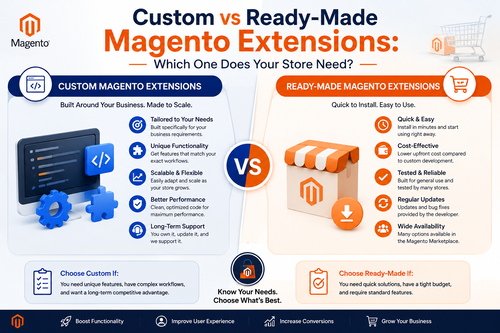
Custom vs Ready-Made Magento Extensions: Which One Does Your Store Need?
At some point, almost every Magento store owner hits the...

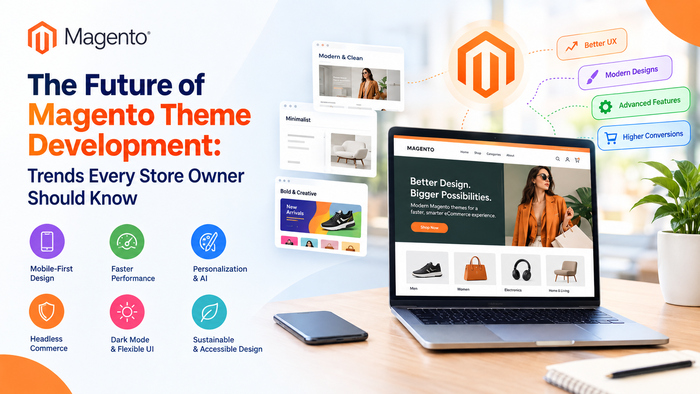
Online shopping doesn't look the same as it did even two years ago. Customers expect stores to load instantly, feel personal, and work flawlessly on whatever device they're holding. Because of this shift, Magento theme development has moved far beyond just picking a nice-looking template — it's now about building an experience that keeps people on your site and, more importantly, gets them to check out.
If you run a Magento or Adobe Commerce store, understanding where theme development is headed isn't just "nice to know." It directly affects your conversion rate, your bounce rate, and honestly, your bottom line. Let's break down what's actually changing and why it matters for your business.
Why Magento Theme Trends Matter More Than Ever
A theme used to be treated as a cosmetic layer — something you'd swap out if you got bored of the colors. That's not how it works anymore. Your theme controls page speed, mobile usability, accessibility, and how search engines read your site. A poorly built theme can quietly cost you sales every single day without you even realizing it.
Store owners who stay ahead of these trends aren't just chasing what's fashionable. They're protecting their store's performance and staying competitive against brands that are already adapting.
1. Hyvä Themes Are Becoming the New Standard
If there's one word dominating conversations in Magento theme development right now, it's Hyvä. Unlike the traditional Luma theme, which relies on heavy JavaScript frameworks like Knockout.js, Hyvä strips things down using Tailwind CSS and Alpine.js. The result? Dramatically faster page loads and noticeably better Core Web Vitals scores.
Store owners switching from Luma to Hyvä are reporting real, measurable improvements — faster load times, lower bounce rates, and better mobile performance. It's not a passing fad; it's quickly becoming the default choice for serious Magento stores.
2. Mobile-First Design Isn't Optional Anymore
More than half of ecommerce traffic now comes from phones, not desktops. That means your theme needs to be designed for mobile first, then adapted for desktop — not the other way around.
Modern Magento themes are being built with:
A store that "also works okay on mobile" isn't good enough anymore. It needs to be built mobile-first from day one.
3. AI-Driven Personalization Is Reshaping Store Design
Artificial intelligence is quietly influencing how Magento themes are structured. Product recommendations, dynamic homepage layouts based on browsing behavior, and smart search suggestions are becoming standard features rather than premium add-ons.
The key here is subtlety — customers don't want to feel like a robot is watching them shop. They just want the experience to feel effortless, like the store somehow "gets" what they're looking for. Good theme development quietly builds this personalization into the layout without making it feel intrusive.
4. Core Web Vitals Are Driving Design Decisions
Google's Core Web Vitals — metrics that measure loading speed, interactivity, and visual stability — have become a real ranking factor. This means theme developers can no longer prioritize flashy animations over performance.
Smart Magento store design now focuses on:
Themes that ignore these factors risk losing both search rankings and customer patience.
5. Headless and PWA Architecture Are Gaining Ground
Progressive Web Apps (PWAs) and headless commerce setups are becoming more common, especially for larger stores. This approach separates the frontend (what customers see) from the backend (how the store runs), giving developers more freedom to build fast, app-like experiences without being boxed in by traditional theme limitations.
It's not the right fit for every business — smaller stores may not need this complexity yet — but for brands scaling quickly, it's worth understanding as an option.
6. Accessibility Is Finally Getting the Attention It Deserves
Accessible design used to be an afterthought in ecommerce. That's changing. More businesses are realizing that accessible themes — ones with proper contrast ratios, keyboard navigation, and screen-reader compatibility — don't just avoid legal risk. They also open the door to a wider customer base.
7. Micro-Interactions and Subtle Animation
Small design touches — a button that gently changes color on hover, a cart icon that bounces slightly when an item is added — are becoming a quiet but effective trend. These micro-interactions make a store feel alive and responsive without slowing down performance, as long as they're implemented carefully.
What This Means for Store Owners
You don't need to chase every single trend at once. What matters is understanding which of these shifts actually apply to your business and your customers. A boutique fashion store has very different priorities than a B2B industrial supplier, even though both run on Magento.
This is exactly the kind of decision-making where working with experienced developers pays off. At Team Magento, we've seen firsthand how the right theme strategy — built around real performance data rather than guesswork — can turn a sluggish, outdated store into one that customers actually enjoy browsing.
Final Thoughts
Magento theme development in 2026 is less about decoration and more about performance, personalization, and trust. Speed, mobile usability, and thoughtful design aren't extras anymore — they're the baseline customers expect. Store owners who treat their theme as a strategic asset, rather than a one-time setup task, will be the ones who stay ahead as ecommerce continues to evolve.
Frequently Asked Questions
1. What is Magento theme development?
It's the process of designing and building the visual layer of a Magento store — including layout, styling, and user interface — so it matches a brand's identity while staying fast and functional.
2. Is Hyvä better than the default Luma theme?
For most stores, yes. Hyvä is lighter, faster, and performs significantly better on Core Web Vitals compared to the traditional Luma theme.
3. How often should I update my Magento theme?
There's no fixed rule, but most stores benefit from a design and performance review every 12–18 months, or sooner if load times or conversion rates start dropping.
4. Does a custom Magento theme help with SEO?
Yes. A well-optimized custom theme improves page speed and mobile usability, both of which are factors search engines consider when ranking sites.
5. Can small businesses benefit from these trends too?
Absolutely. You don't need enterprise-level budgets to apply mobile-first design, better speed optimization, or subtle personalization — many of these improvements are achievable with focused, thoughtful development.
Read More:
https://contra.com/community/e6z0Ej0Q-5-mistakes-to-avoid-when-hiring
At some point, almost every Magento store owner hits the...
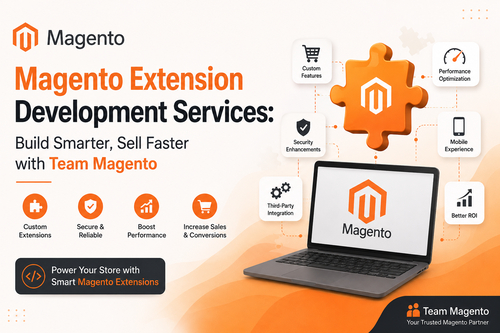
Why Your Magento Store Needs Custom ExtensionsOut-of-the-box Magento is powerful,...
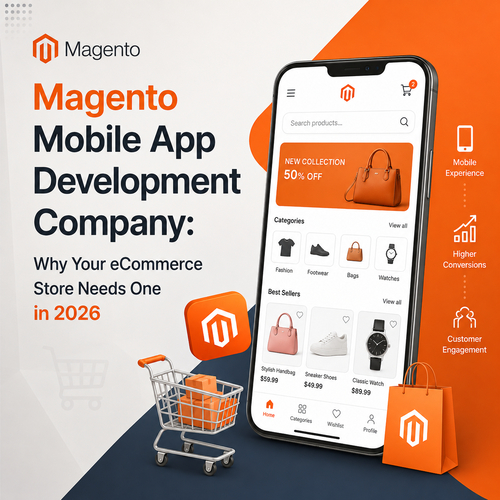
Looking for a reliable Magento Mobile App Development Company to...
If you’re running an online store and searching for ways...
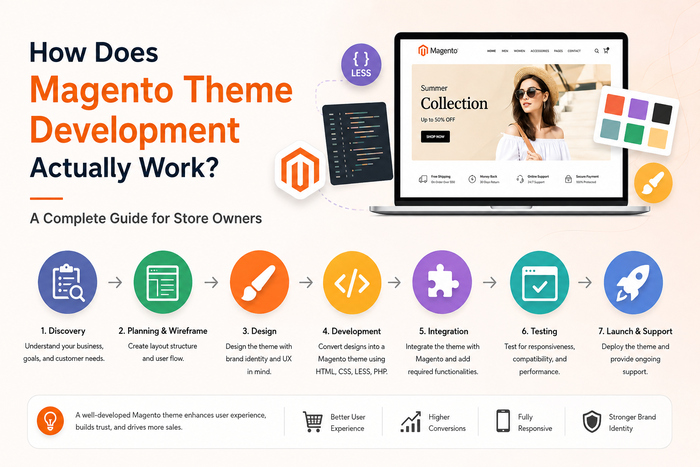
Most people searching for "Magento theme development" aren't just looking...
If you're running a Magento store today, you already know...
Online shopping doesn't look the same as it did even...
Looking for a reliable Magento Theme Development Company for your...