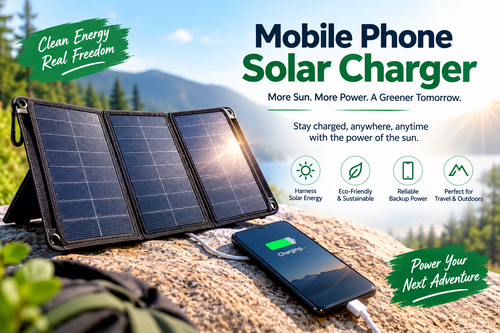
Mobile Phone Solar Charger: How It Works, Benefits & Why You Need One in 2026
As smartphones have become essential for communication, navigation, entertainment, and...

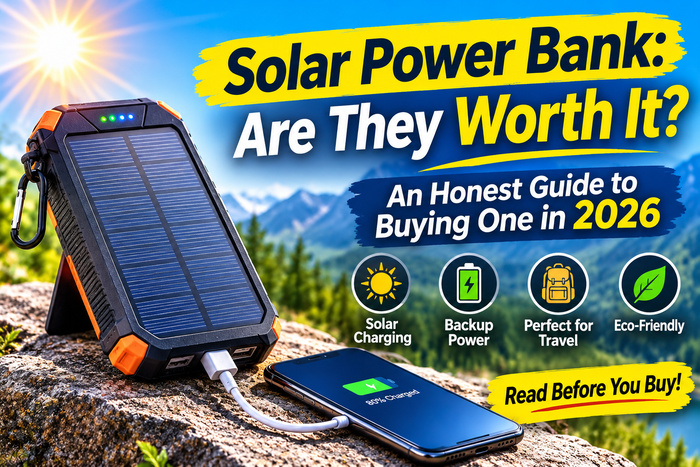
A solar power bank sounds like the perfect gadget. It stores energy, it recharges from the sun, and it keeps your phone alive when there is no outlet in sight. Search online and you will find hundreds of listings promising 20,000, 30,000 or even 50,000 mAh with a tiny panel on the back.
But experienced hikers, campers and gear reviewers often have a very different opinion: most solar power banks are oversold. The truth sits somewhere in the middle.
This guide gives you that middle ground. You will learn how a solar power bank works, what the numbers on the box really mean, where these devices shine, where they fall short, and how to decide whether one belongs in your bag.
What Is a Solar Power Bank?
A solar power bank is a portable battery pack with a small photovoltaic (solar) panel built into its body. It can be charged in two ways:
Once charged, it works like any other power bank: you connect your phone, earbuds, GPS device or other small electronics, and it passes the stored energy along.
You may also see these products called solar chargers, solar battery banks, portable solar chargers or solar-powered battery packs.
How Does a Solar Power Bank Work?
The process has four stages:
The key insight is that the panel and the battery are two separate parts, and they are rarely well matched. A big battery with a postage-stamp panel will take a very long time to fill from the sun.
Do Solar Power Banks Really Work?
Yes, they work, but three realities shape what you should expect.
1. Usable capacity is lower than advertised
A power bank rated at 10,000 mAh does not deliver 10,000 mAh to your phone. Voltage conversion, heat and circuit losses mean you typically get roughly two-thirds of the rated figure. Some listings also exaggerate capacity, so buy from brands that publish clear specifications.
2. Solar charging is slow
A small panel produces a modest amount of power even in strong, direct sun. Refilling a large power bank from solar alone can take many days of good sunlight. That is why most reviewers describe solar on a power bank as an emergency trickle charger, not a primary charging method.
3. Heat is a real concern
Leaving a power bank in direct sun to charge can heat the battery, and lithium batteries do not like high temperatures. Reputable products include temperature protection, but you should still avoid leaving any battery baking in a hot car or on a dark rock in summer.
None of this makes solar power banks useless. It means their real job is insurance: a way to add some energy when you are stuck with no outlet, rather than a replacement for charging at home.
Types of Solar Power Banks and Solar Chargers
Integrated-Panel Solar Power Banks
These are the common, affordable all-in-one designs. They are convenient, often include a flashlight, and offer high capacity. The weakness is the small panel, which makes solar refills slow.
Power Bank Plus Foldable Solar Panel
This setup pairs a normal power bank with a separate, larger panel that unfolds in the sun. It collects more energy, which is why many experienced outdoor users prefer it. The cost is extra weight, extra cables and more setup.
Solar Phone Cases
A solar charging case builds the battery and the panel into a slim case that stays on your phone. You trade capacity for convenience, because the battery is smaller, but you always have it with you and cannot forget to pack it.
How Many mAh Do You Actually Need?
Most phones hold roughly 3,000 to 5,000 mAh. Using the two-thirds rule of thumb:
Bigger is not always better. A 30,000 mAh solar bank you cannot refill from its panel in any reasonable time is really just a heavy regular power bank. Match capacity to the number of days you will be away from an outlet, and to how much you can realistically recharge by solar.
What to Check Before You Buy
Honest capacity and watt-hours. Look for clear mAh and Wh ratings from established brands.
Panel size and wattage. A larger panel or a foldable one collects more energy. Tiny panels mostly add peace of mind.
Battery recharge via USB. You should be able to fill it from an outlet quickly before a trip, so solar acts as a bonus.
Output ports and speed. USB-C is the modern standard. Check whether it supports fast charging for your phone.
Durability and weather resistance. Look at IP ratings for dust and water, plus impact resistance.
Heat protection. Temperature monitoring and quality cells matter, especially for sun exposure.
Size and weight. If you hike, every ounce counts.
Smart monitoring. The ability to see how much power the solar panel is actually collecting removes guesswork.
Who Benefits Most From a Solar Power Bank?
Campers and hikers on multi-day trips with no outlets can use solar to stretch their power.
Emergency-minded households in hurricane, wildfire or outage-prone areas gain a backup that does not depend on the grid.
Travellers in remote areas or on long journeys can reduce outlet dependence.
Outdoor and field workers who spend entire shifts away from power gain a safety margin for communication.
Off-grid and remote-area residents where outages are frequent can keep essential communication going.
Tips for Getting the Most From a Solar Power Bank
A Different Approach: The Solar Power Bank Built Into Your Phone Case
If you like the idea of solar backup but do not want to carry and manage a separate device, there is another way to think about it: put the power bank in the phone case.
iPowerUp’s Uno Solar Case takes this approach. According to iPowerUp, it combines:
An honest comparison. At 1,700 to 2,100 mAh, the Uno is far smaller than a 20,000 mAh power bank, and it is priced higher than many basic solar power banks (Uno Solar Cases start at $119.99). If your priority is maximum capacity per dollar, a conventional solar power bank or a power bank plus a foldable panel will deliver more raw power.
What the Uno offers is a different kind of value: backup power that stays with your phone, protects it as a case, recharges itself in the sun, and warns you before the battery runs out. It is designed for emergency backup and top-ups, and for people who prefer carrying one item instead of three.
You can also explore the ModCases range for modular solar options across other phones, including iPhone 17 Pro Max and Galaxy S25 Ultra. Check each product page for current availability.
Frequently Asked Questions
Are solar power banks worth it?
They are worth it if you need backup power away from outlets, such as when camping, travelling remotely or preparing for outages, and you treat solar as a supplement. For daily use near outlets, a regular power bank is cheaper and simpler.
How long does it take to charge a solar power bank by sun?
It depends on the panel size, sunlight strength and battery capacity. Large-capacity banks with small panels can take days of strong sun. Charge by USB first and use solar as a top-up.
Do solar power banks work on cloudy days?
They do, but output drops significantly under clouds or shade. Plan for slower charging in poor weather.
Can a solar power bank charge my phone directly from the sun?
Some can, but the output is unstable and slow. It is more reliable to let the bank collect and store energy, then charge your phone from the battery.
Are solar power banks safe?
Quality products from reputable brands with protection circuits are generally safe. Avoid leaving them in extreme heat, and avoid unbranded products without clear specifications.
How many times can a solar power bank charge a phone?
It depends on the rated capacity and your phone. Expect around two-thirds of the advertised capacity to reach your phone.
Is a solar power bank better than a solar phone case?
It depends on what you value. A power bank offers more capacity per dollar. A solar phone case offers convenience and protection, with a smaller battery that is always attached to your phone.
Final Thoughts
A solar power bank is not magic, and no honest product description should pretend otherwise. It will not fully recharge in an hour, and it will not replace your wall charger. What it can do is give you resilience when outlets are missing, which is exactly when your phone matters most.
Choose by real capacity, panel quality, safety and the way you actually live. For maximum raw power, go with a high-capacity bank and a good panel. For simplicity, a solar case that stays on your phone may be the smarter fit.
Want solar backup that never leaves your phone? Explore the iPowerUp Uno Solar Case and see how sunlight can keep you connected.
As smartphones have become essential for communication, navigation, entertainment, and...
Choosing the right cell phone case feels simple until you...
Your smartphone is an essential part of everyday life, but...
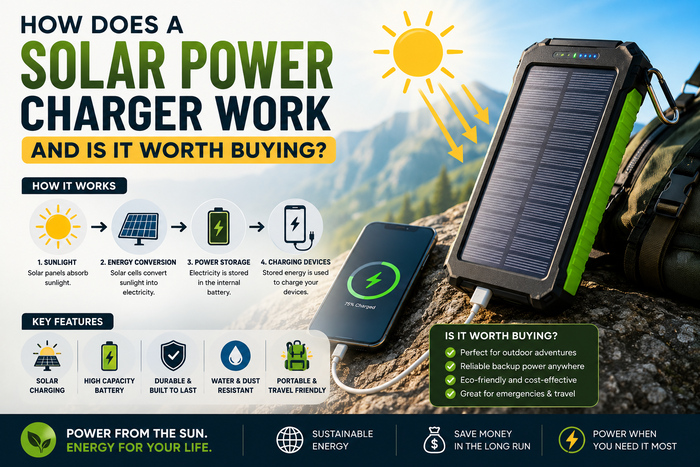
If you've ever searched for a way to charge your...
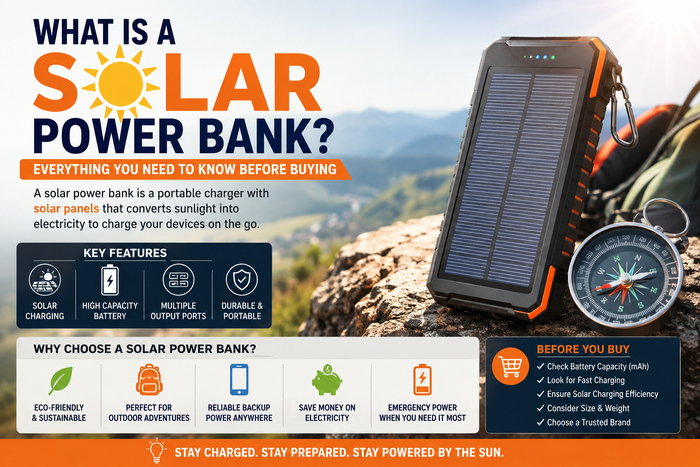
Imagine you are halfway through a hike, your phone is...
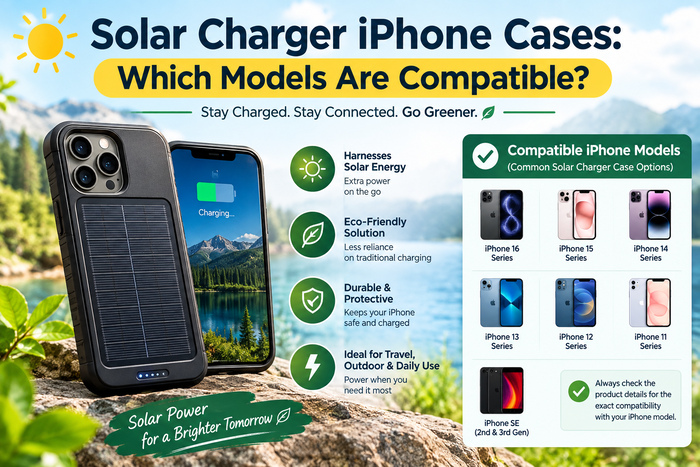
If you've decided to try a solar charger case for...
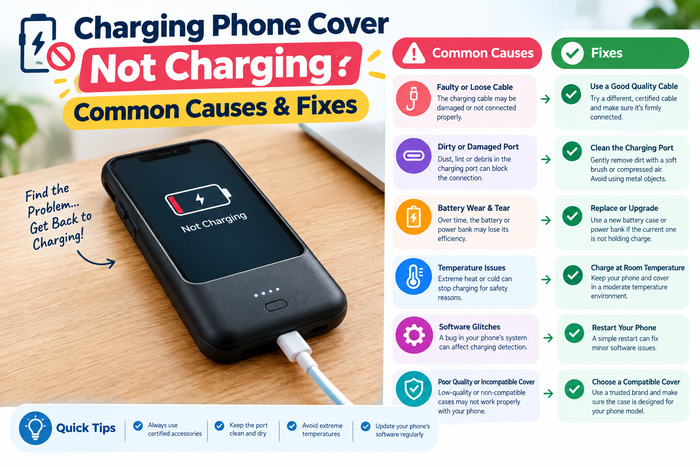
You slip your phone into its charging phone cover, press...
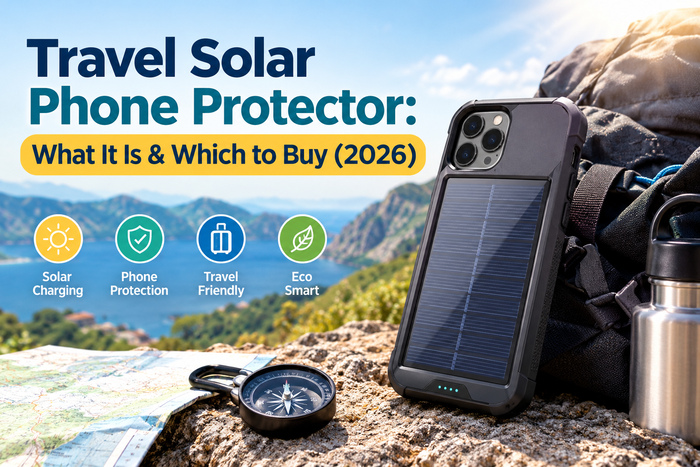
Your phone is your map, camera, boarding pass and translator...
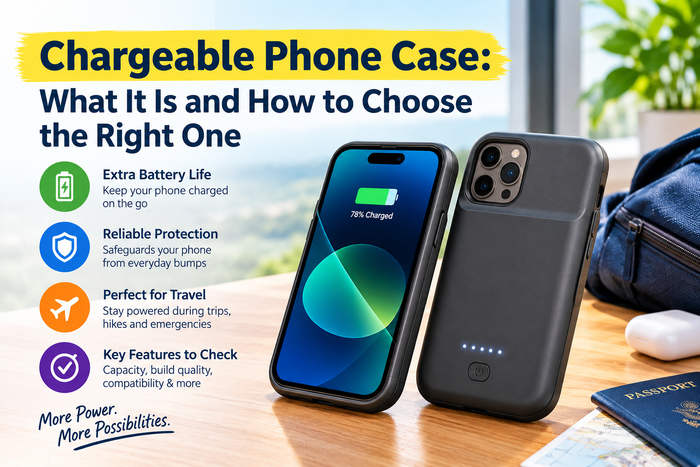
Your phone is at 12%, you are far from an...
A solar power bank sounds like the perfect gadget. It...
Here is a small confession from our support team: nearly...

Are you in need of dependable legal help in the...

A Corporate Law Firm will advise companies, start-ups and other...

Property Verify India offers an array of verified and legally...

If you require a competent Divorce Lawyer in Gurugram Court,...